If you are eyeing Fernley as a place to buy a single-family rental, the big question is simple: will the numbers and the day-to-day realities actually work for you? That is especially important in a market like Fernley, where detached homes make up most of the housing stock and local demand is tied to working households, commuters, and regional job growth. In this guide, you will get a practical look at what drives rental demand, where investors need to be careful, and how to evaluate a property with more confidence. Let’s dive in.
Why Fernley draws rental investors
Fernley has several traits that make it stand out for single-family rental buyers. The city’s estimated population reached 25,508 in 2024, and that population has grown 11.4% since 2020. Growth like that can support housing demand, especially in a market that is not built around dense apartment living.
The local housing profile also points to a household-driven market. Fernley reports a 72.0% owner-occupied housing unit rate, a median age of 36.4, and a mean commute time of 27.9 minutes. Those numbers suggest many residents are working-age adults looking for practical housing near jobs and transportation routes.
Location matters too. City materials describe Fernley as about 30 minutes from the Reno-Sparks metro area and about 15 miles from Tahoe Reno Industrial Center. The city also identifies transport, storage, and distribution as its largest industry employer, with manufacturing second, which helps explain why Fernley often appeals to renters connected to regional logistics and commuter employment.
Single-family homes dominate Fernley
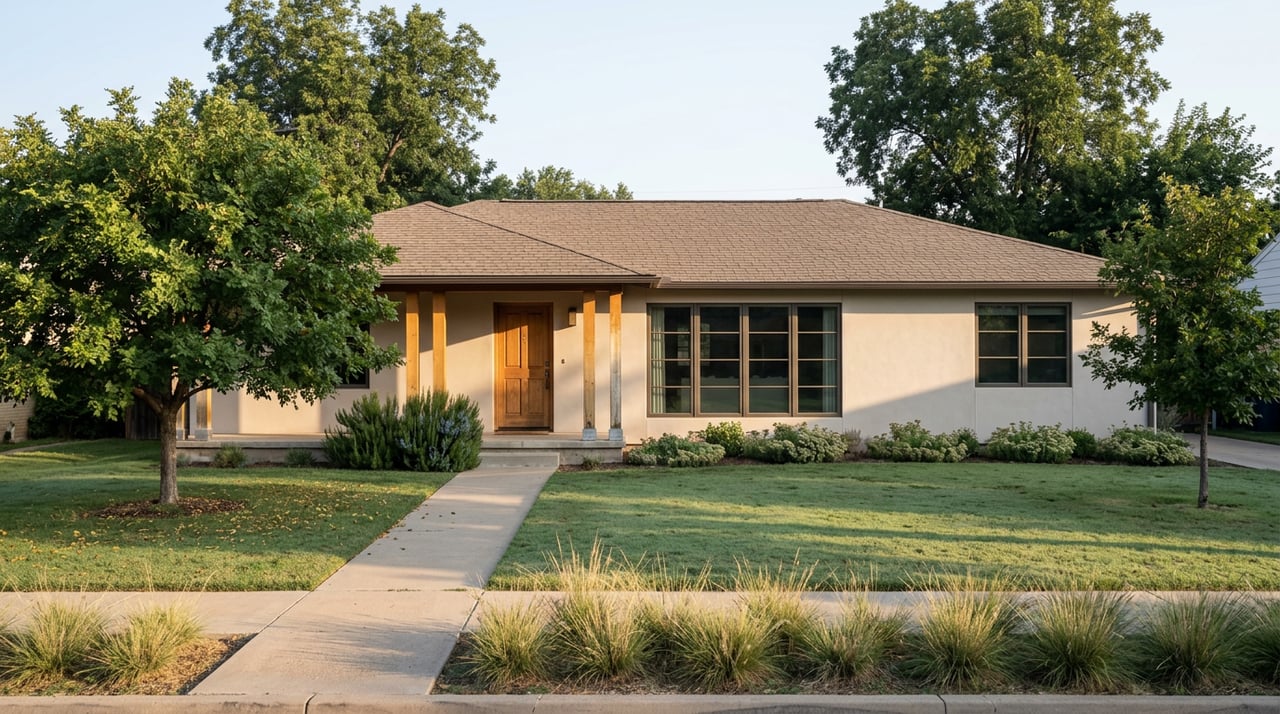
If your strategy is focused on detached rentals, Fernley fits that profile well. A 2024 Lyon County housing assessment found that 75.5% of Fernley’s housing stock is 1-unit detached. Multi-family housing makes up a much smaller share at 10.6%, while 1-unit attached homes account for 2.3%.
That matters because it means your investment pool is likely to include the kind of homes many renters already expect in this market. Instead of competing only in a small niche, you are operating in a housing mix where detached homes are the norm. For many investors, that creates a clearer path to matching local demand.
The same report also shows Fernley had 8,635 housing units in 2022, up 10.8% from 2015. Inventory has grown, but so has the city. That combination makes it important to study each property closely rather than assume every home will perform the same way.
What Fernley renters may be looking for
A useful clue for investors is the size of renter-occupied homes in the city. In Fernley, 45.5% of renter-occupied homes had 3 or more bedrooms, and another 44.5% had 2 bedrooms. That tells you the rental market is not limited to small units or short-term household setups.
For single-family rental owners, this is encouraging. It suggests there is meaningful demand for homes with enough space for roommates, remote work, storage, or larger household needs. In practical terms, well-located homes with functional layouts may have broad appeal.
Owner-occupied homes skew even larger, with 90.3% having 3 or more bedrooms. That does not guarantee every larger rental will outperform, but it does reinforce the idea that Fernley is a market built around houses rather than compact urban apartments.
The cash-flow question in Fernley
Here is where investors need to stay disciplined. Fernley may offer solid rental demand, but cash flow is not automatic. You need to compare expected rent to the full carrying cost of the property, not just the mortgage payment.
The Census Bureau reports median gross rent in Fernley at $1,463. At the same time, median selected monthly owner costs with a mortgage are $1,808. That gap is an important reminder that a median-priced purchase may not pencil out comfortably unless you have favorable financing, a larger down payment, or a property with stronger rent potential.
There is also a useful county-level rent benchmark from Nevada’s FY2025 fair market rent tables. In Lyon County, gross fair market rent is listed at $1,249 for a 2-bedroom unit and $1,750 for a 3-bedroom unit. That range suggests some larger homes may have a better shot at covering expenses, but results will still vary property by property.
Costs to include in your math
When you underwrite a Fernley rental, be sure you account for more than principal and interest. A realistic analysis should include:
- Property taxes
- Insurance
- Repairs and routine maintenance
- Vacancy and turnover costs
- Property management, if used
- Capital reserves for larger future repairs
Fernley’s median owner-occupied home value is $366,700, which means purchase price discipline matters. If you stretch too far on acquisition, the rent may not leave enough room for surprises.
Older housing stock means more inspection work
One of the most important details in Fernley is the age of the housing stock. According to the Lyon County assessment, 86.2% of housing units were built between 1970 and 2009, while only 6.8% were built in 2010 or later. For investors, that should trigger a more careful review before you buy.
Older homes can still be strong rentals, but they usually require more planning. Systems, roofs, HVAC equipment, and other major components may be closer to replacement than they appear in photos. A home that looks like a deal on paper can become much more expensive if you underbudget for condition and long-term upkeep.
This is one reason reserve planning matters so much in Fernley. You want enough margin to handle both routine repairs and larger capital items without putting the investment under stress.
Vacancy and supply deserve attention
The county report identified 1,903 renter-occupied households in Fernley in 2022, along with 94 vacant units for rent. That does not point to an oversized apartment market, but it does mean renters have some level of choice. You cannot assume a property will lease quickly at any price.
To compete well, investors should pay attention to condition, layout, and realistic pricing. In a market with workforce and commuter demand, clean and functional often matters more than flashy upgrades. A home that is priced right and easy to maintain may perform better than one with expensive finishes that do not meaningfully raise rent.
Nevada rules every landlord should know
If you are buying a rental in Fernley, Nevada compliance is part of the investment decision. State law requires landlords to maintain a dwelling in a habitable condition. It also prohibits charging tenants for repairs, maintenance tasks, or other work that the landlord is legally obligated to perform.
Access rules matter too. A tenant generally cannot unreasonably withhold consent when access is needed, but a landlord usually must give at least 24 hours’ notice before entering, except in an emergency. That means your systems for communication, vendor scheduling, and maintenance coordination need to be organized from day one.
Rent increases and deposits in Nevada
Nevada law sets clear notice standards for rent increases. Landlords generally must provide 60 days’ written notice before the first rental payment affected by the increase. For a periodic tenancy of less than one month, the notice period is generally 30 days.
Security deposits also have limits. The total amount or value of the security deposit, surety bond, and last month’s rent generally may not exceed 3 months’ periodic rent. After the tenancy ends, the landlord must provide an itemized accounting and return any remaining deposit within 30 days.
Essential repairs have deadlines
Nevada law is also specific about essential services. If heat, air-conditioning, running water, hot water, electricity, gas, or a functioning door lock fails and the home becomes unfit for habitation, the landlord has 48 hours after written notice to cure the breach, excluding Saturdays, Sundays, and legal holidays.
For investors, this is not just a legal note. It is a business planning issue. You need reliable vendors, cash reserves, and a quick response process if you want to operate safely and stay compliant.
How to evaluate a Fernley single-family rental
Fernley can make sense for investors who want a detached-home rental market tied to Northern Nevada employment and commuter patterns. Still, this is a market where careful buying matters more than broad assumptions. A property-by-property review is the smartest approach.
Before you make an offer, focus on a few core questions:
- What is the realistic rent range based on size and condition?
- How does that rent compare to your full monthly carrying cost?
- What repairs or replacements may be needed in the next few years?
- Does the home’s layout fit the local demand for 2- and 3-bedroom-plus rentals?
- Can you comfortably handle vacancy, maintenance, and legal compliance?
If the numbers only work under perfect conditions, the property may not be the right fit. In Fernley, steady investing usually comes from buying with enough margin, not from hoping costs stay low.
Why local guidance helps
Out-of-area buyers and first-time investors often see Fernley’s growth and regional job access and assume every detached home is a strong rental candidate. The reality is more nuanced. Two homes on similar streets can perform very differently based on age, condition, carrying costs, and realistic rent.
That is where local market insight can save time and money. A knowledgeable real estate team can help you compare inventory, assess whether a property fits your goals, and understand how Fernley connects to the broader Northern Nevada commuter market. For investors who want practical, on-the-ground guidance, that local perspective matters.
If you are weighing a purchase in Fernley and want a clear-eyed view of the numbers, local inventory, and what to watch for before you buy, Hadley Faught can help you evaluate your next move.
FAQs
What makes Fernley, Nevada attractive for single-family rentals?
- Fernley has population growth, a detached-home-heavy housing stock, and job ties to Reno-Sparks, Tahoe Reno Industrial Center, logistics, and manufacturing, which can support demand for practical rental housing.
Are single-family rentals common in Fernley, Nevada?
- Yes. A Lyon County housing assessment found that 75.5% of Fernley’s housing stock is 1-unit detached, making single-family homes a major part of the local market.
What rent levels should investors expect in Fernley, Nevada?
- Fernley’s median gross rent is $1,463, and Nevada’s FY2025 Lyon County fair market rents list $1,249 for 2-bedroom units and $1,750 for 3-bedroom units, though actual performance depends on the individual property.
Is Fernley, Nevada a strong cash-flow market for investors?
- It can work in some cases, but investors need to be careful because median selected monthly owner costs with a mortgage are $1,808, which is above the city’s median gross rent of $1,463.
What landlord laws matter when owning rentals in Fernley, Nevada?
- Nevada landlords must maintain habitable housing, usually give at least 24 hours’ notice before entry, provide required notice for rent increases, follow deposit limits and return rules, and respond quickly when essential services fail.
Why should investors inspect older Fernley, Nevada homes carefully?
- Because 86.2% of Fernley housing units were built between 1970 and 2009, many properties may need closer review for repairs, maintenance needs, and future capital expenses.